
ANDERSON BOOK CLUB: DARE TO LEAD BY BRENÉ BROWN
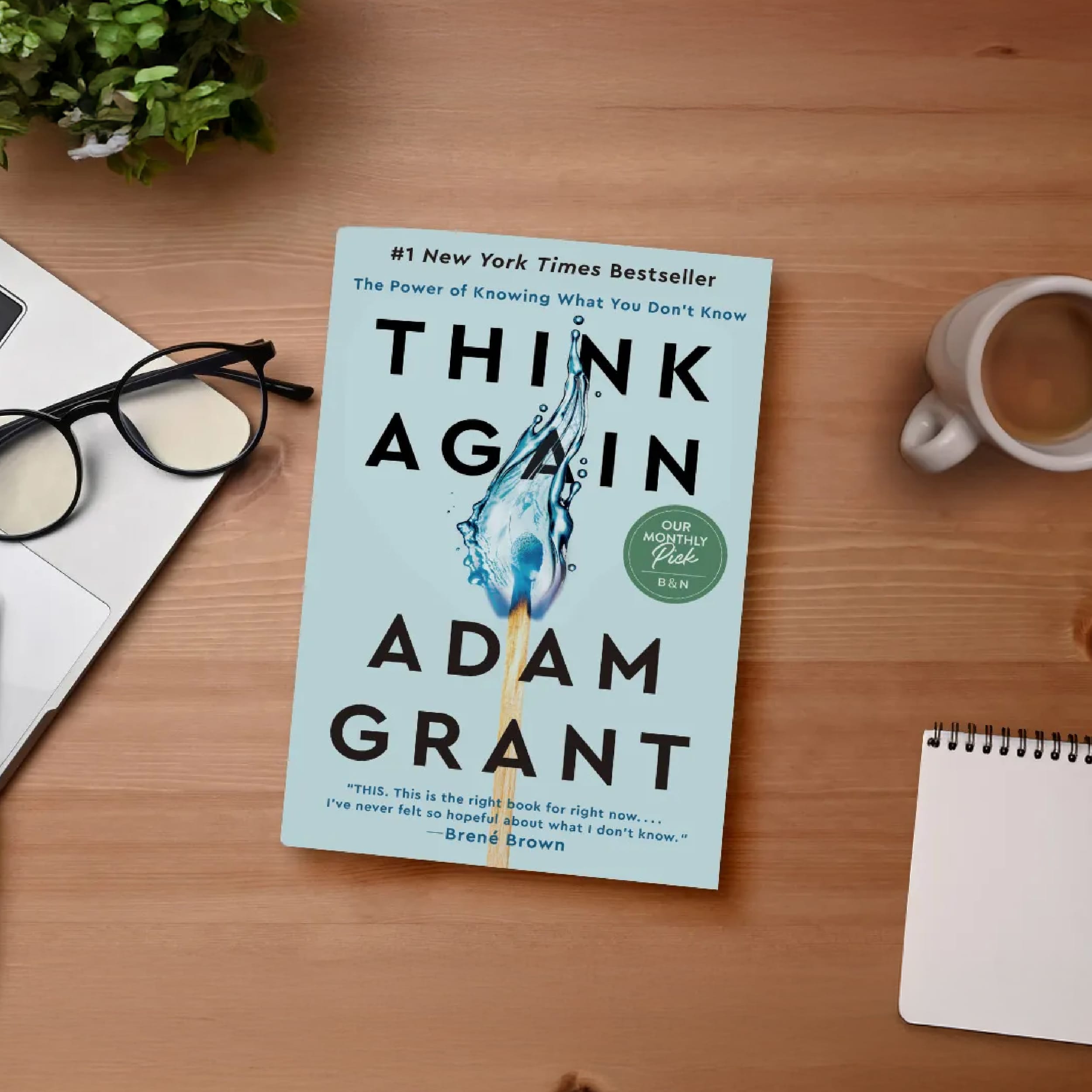
This quarter, the ANDERSON book club took a step back to challenge our own beliefs by reading Think Again by Adam Grant. Rather than focusing on having the “right” answers, Grant encourages curiosity, open-mindedness, and the confidence to rethink longstanding assumptions. It reminded us that some of the best ideas come from staying flexible and being willing to change course.
What really resonated with our team was the practical application of these ideas in everyday work, from collaboration and feedback to problem-solving and decision-making. The conversations sparked by this read pushed us to listen more closely, ask better questions, and approach challenges with a fresh perspective. We’re excited to share the takeaways that are helping us think more clearly, work more thoughtfully, and grow together.
Sara
From a creative director’s perspective, one key takeaway is that creative leadership isn’t about defending the best idea; it’s about creating space for the best idea to evolve. The scientific mentality (treating ideas like hypotheses, not verdicts) helps keep creativity flexible and bold. I can leverage taste and instinct without turning them into fixed principles or facts. The work improves because we’re always thinking in real time and treating creative as a living thing.
Matt
I got affirmation that our philosophy on persuasive messaging is correct (Chapter 5). Working in the political realm, we have to teach our clients that to properly persuade swing voters, our message, tone, and verbiage must come from a place of respect. If we are combative or patronizing, a message falls flat.
Austin
As a digital media manager, I’ve learned that the people who help me grow most aren’t the ones who agree right away, but the ones who challenge my thinking early, before ideas are locked in or shared with a client. Building a challenge network across strategy, analytics, creative, and account teams has helped surface blind spots and pressure-test assumptions sooner. The real work is responding to that pushback as collaboration, not something to defend against.
Lindsey
My biggest takeaway from Think Again is the power of staying curious and flexible in my approach to challenges. The book reminded me that being willing to question assumptions and rethink ideas, rather than sticking to what feels “right,” leads to better decisions and growth. In media, this translates to treating strategies and campaigns like living experiments, learning from results, and iterating quickly. Approaching work with curiosity instead of certainty makes the process smarter, faster, and more adaptable.
Chelsea
One idea from the book that really resonated with me is the distinction between performance cultures, which reward looking smart, and learning cultures, which reward getting better. It forces you to consider what actually matters: winning or improving? When success is defined solely by winning, failure feels like a setback rather than a necessary step toward growth. A culture that values improvement as much as outcomes would foster greater curiosity, resilience, and a healthier relationship with failure, giving people the freedom to learn and grow without fear of making mistakes.
Maddy
One takeaway that really stuck with me was the idea that consistency can quietly turn into rigidity if we stop questioning it. In advertising, we often stick with approaches that have worked in the past because they feel safe and defensible, especially in an industry where decisions are expected to be backed by reliable evidence. As we discussed as a group, this sometimes means pushing beyond our own comfort zones and, just as importantly, clearly communicating that rationale to the people we work with. When we stay curious and open to change, we create more room for experimentation, learning, and better outcomes overall.
Ansley
My biggest takeaway was how important it is, especially in account services, to stay open rather than certain. Adam Grant reinforced that questioning assumptions and being willing to rethink plans leads to better outcomes for both teams and clients. As an account coordinator, this means approaching feedback, strategy, and client conversations with curiosity and flexibility instead of defensiveness. When I lead with openness, it builds stronger relationships, smoother collaboration, and smarter solutions.
Brett
My biggest takeaway is that we should avoid becoming too attached to our own ideas and opinions. Going all in on specific ideas can make it much harder to deal with finding out that they are wrong. If we’re too fixated on an idea, we often try to defend it even against all the evidence telling us we need to rethink. We should instead follow what we value rather than basing our identities on our ideas and opinions. This ensures we can handle being wrong in a positive way and helps us rethink.
Carson
A takeaway from Think Again that resonated with me the most is the art of influential listening. I found the stories of the vaccine-wary mother and the Ugandan anti-war advocate particularly impactful, as both demonstrated the power of truly hearing other people’s perspectives. These examples were extraordinary because they showed the power of truly absorbing what others are saying, which ultimately improves communication in the long run. As creative professionals, these skills are essential because they enable us to fully accept feedback and engage in open dialogue with clients.
Allie
The conversation about vulnerability and its importance in the workplace really stood out to me. The misconception that vulnerability is weakness can be a hindrance to our work relationships One of my takeaways from this book was that we are more likely to change someone’s mind by being curious than by being confrontational. Listening, asking thoughtful questions, and showing genuine respect lowers defensiveness and helps people feel safe. Real persuasion happens when people arrive at new conclusions themselves, rather than being argued into them. We deal with this often when working with clients who have differing viewpoints. Guiding them through the creative process ultimately leads to a more collaborative experience, rather than becoming defensive when we don’t see eye to eye.
Jenny
My biggest takeaway from Think Again was how important it is to separate our identity from our ideas. As a copywriter, I pour a lot of thought and care into generating words, concepts, and ideas, so any “negative” feedback can feel personal fast. The book was a good reminder that ideas aren’t who we are; they’re just things we make. Detaching a bit makes it easier to hear criticism without getting defensive, and ultimately leads to stronger work and better collaboration.
At ANDERSON, we’re always looking for ways to sharpen our thinking and challenge ourselves to grow. Think Again reinforced the value of staying curious, questioning assumptions, and remaining open to new perspectives. The ideas in this book sparked thoughtful conversations across our team and are already influencing how we approach collaboration, feedback, and problem-solving.
As we move forward, these lessons will continue to shape how we think more clearly, adapt more confidently, and work better together, both in our day-to-day work and beyond.